Cotton Cloud: A Playful Display Font for Modern Creative Projects
In a digital landscape saturated with geometric sans-serifs and rigid serif typefaces, finding a font that balances whimsy with professional execution can be challenging. Cotton Cloud emerges as a distinct alternative, designed specifically to inject personality into visual communications without sacrificing legibility. This display font is not merely a decorative element; it is a strategic tool for brands and creators aiming to capture attention through softness and approachability.
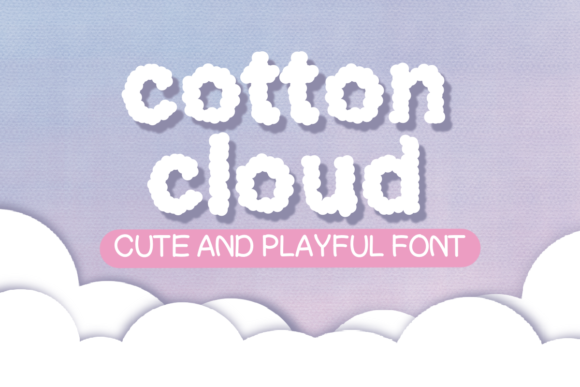
The core identity of Cotton Cloud lies in its unique geometry. Unlike standard rounded fonts that often feel generic, this typeface mimics the organic irregularities of a cloud, cotton candy, or a puffy marshmallow. The letterforms are intentionally chubby and voluminous, creating a tactile sensation even on a flat screen. For professionals working in children's education, toy marketing, or lifestyle blogging, this specific aesthetic offers a way to connect emotionally with audiences who value comfort and fun. However, its utility extends beyond just "cute" applications, provided the design context is handled with care.
Defining the Aesthetic and Technical Characteristics
When evaluating Cotton Cloud, the first observation is the consistency of its weight. Most display fonts struggle to maintain their character when scaled down or used in dense paragraphs, but this typeface maintains its structural integrity across various sizes. The strokes are thick and uniform, yet they avoid the blocky appearance common in heavy weights. Instead, the terminals are softened, giving the letters a floating quality that suggests lightness despite their substantial presence.
The font family includes standard Latin characters, numbers, and punctuation, ensuring basic functionality for headlines, logos, and short captions. The shapes are designed to interlock smoothly, preventing awkward gaps that often plague chunky fonts. This attention to spacing (kerning) is crucial for maintaining a polished look. When set correctly, the text reads as a cohesive unit rather than a collection of isolated blobs. This technical reliability makes it suitable for projects where time is limited and manual adjustments are not feasible.
Beyond the letterforms themselves, the inclusion of bonus assets adds significant practical value. The package comes with three Rainbow PNG files. These are not merely decorative afterthoughts but functional design elements intended to complement the font. In graphic design, integrating custom graphics can elevate a layout from simple to sophisticated. These rainbow assets allow designers to add immediate color accents without needing to create vector illustrations from scratch. They are particularly effective when paired with bright colors, enhancing the vibrant, energetic vibe that the font is known for.
Visual Impact and Color Synergy
The effectiveness of Cotton Cloud is heavily dependent on color pairing. Because the font itself is shape-driven rather than texture-driven, it relies on color to convey mood. The recommendation to use bright colors is well-founded. Pastels may soften the impact too much, causing the font to lose its playful edge, while neon shades can sometimes clash with the soft edges if not balanced carefully. Optimal results are achieved using high-saturation primary and secondary colors—think sky blue, sunny yellow, and grass green—which mirror the cheerful nature of the cloud imagery.
For marketers and small business owners, this synergy allows for rapid brand development. A logo featuring Cotton Cloud in a bold blue, accented by one of the included rainbow PNGs, instantly communicates a friendly, accessible, and modern brand voice. This is particularly useful for startups in the toy, confectionery, or educational sectors where trust and approachability are paramount. The visual language speaks directly to the subconscious desire for safety and joy, which is a powerful psychological trigger in consumer behavior.
Practical Applications in Professional Workflows
While the font is explicitly marketed towards children-themed designs, experienced creatives know that versatility is key. The question often arises: can Cotton Cloud be used in more serious contexts? The answer is nuanced. It is generally unsuitable for body copy, legal documents, or corporate financial reports where neutrality is required. However, it excels in hero sections, event posters, social media graphics, and packaging labels where the goal is to stop the scroll.
Consider the workflow of a freelance illustrator or a content creator. Time is a scarce resource. Using a specialized font like Cotton Cloud reduces the need for extensive graphic design work. By combining the typography with the provided rainbow PNGs, a designer can create a complete visual theme in minutes. This efficiency is valuable for bloggers managing tight deadlines or educators preparing materials for classroom displays. The ability to quickly produce high-quality, thematic visuals without hiring a dedicated graphic designer can be a game-changer for solo entrepreneurs.
Furthermore, the font's compatibility with various software platforms ensures broad usability. Whether used in Adobe Illustrator for print, Canva for quick social posts, or PowerPoint for presentations, the file formats support standard workflows. The clean outlines of the characters ensure that they remain crisp when converted to PDFs or exported for web use, provided the resolution settings are appropriate. This consistency across different mediums reinforces the font's reliability as a long-term asset for a creative library.
Limitations and Strategic Considerations
No single typeface is a universal solution, and Cotton Cloud is no exception. Its primary limitation is specificity. If a project requires a tone of sophistication, minimalism, or authority, this font will undermine the message. The "chubby" nature of the letters can make text appear childish if the subject matter does not align with that perception. For example, using Cotton Cloud for a law firm or a medical clinic would likely confuse potential clients and damage credibility.
Additionally, overuse can lead to visual fatigue. Because the font is so visually dominant, it demands space. Crowding Cotton Cloud into a dense grid of information will result in a cluttered and unreadable layout. Designers must exercise restraint, using it primarily for headlines, pull quotes, or key emphasis points. Pairing it with a neutral, clean sans-serif for supporting text is a proven strategy to balance the composition. This contrast allows the playful font to shine without overwhelming the viewer.
Another consideration is accessibility. While the large x-height and open counters generally aid readability, the highly stylized nature of some characters might pose challenges for users with dyslexia or visual impairments if used at small sizes. Best practices suggest reserving the font for larger point sizes and ensuring sufficient contrast against the background. The bright color combinations recommended for the font should also be tested for color blindness compliance to ensure inclusivity.
Evaluating Long-Term Value for Creators
From an investment perspective, the value of Cotton Cloud lies in its ability to solve specific design problems efficiently. For professionals aged 20 to 50 who wear multiple hats—from marketer to designer—the inclusion of bonus assets like the Rainbow PNGs increases the return on investment. These assets eliminate the need to source external clip art, reducing costs and streamlining the creative process.
The font's timeless appeal is another factor. Trends in design often cycle, but the association between clouds/cotton candy and childhood remains constant. As long as there is a market for products and services targeting families and children, a font with this specific character will retain relevance. It avoids the extreme stylistic quirks that date quickly, offering a safe bet for projects with a longer shelf life, such as book covers, permanent signage, or annual branding campaigns.
Ultimately, Cotton Cloud represents a thoughtful addition to a digital toolkit. It is not a replacement for a versatile system font, but rather a specialized instrument for specific tasks. When used with an understanding of its strengths and limitations, it can transform ordinary layouts into engaging experiences. For those looking to add a touch of whimsy to their work without compromising on quality, this font offers a reliable path forward. The combination of its unique shape, robust character set, and supplementary graphics makes it a practical choice for anyone seeking to communicate joy, creativity, and warmth in their visual storytelling.